
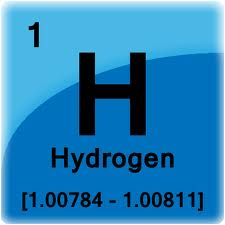
Atomic Number: 1
Atomic Weight: 1.00794
Melting Point: 13.81 K (-259.34°C or -434.81°F)
Boiling Point: 20.28 K (-252.87°C or -423.17°F)
Density: 0.00008988 grams per cubic centimeter
Phase at Room Temperature: Gas
Element Classification: Non-metal
Period Number: 1 Group Number: 1 Group Name: none
What’s in a name? From the Greek words hydro and genes, which together mean “water forming.”
Say what? Hydrogen is pronounced as HI-dreh-jen.
History and Uses:
Scientists had been producing hydrogen for years before it was recognized as an element. Written records indicate that Robert Boyle produced hydrogen gas as early as 1671 while experimenting with iron and acids. Hydrogen was first recognized as a distinct element by Henry Cavendish in 1766.
Composed of a single proton and a single electron, hydrogen is the simplest and most abundant element in the universe. It is estimated that 90% of the visible universe is composed of hydrogen.
Hydrogen is the raw fuel that most stars ‘burn’ to produce energy. The same process, known as fusion, is being studied as a possible power source for use on earth. The sun’s supply of hydrogen is expected to last another 5 billion years.
Hydrogen is a commercially important element. Large amounts of hydrogen are combined with nitrogen from the air to produce ammonia (NH3) through a process called the Haber process. Hydrogen is also added to fats and oils, such as peanut oil, through a process called hydrogenation. Liquid hydrogen is used in the study of superconductors and, when combined with liquid oxygen, makes an excellent rocket fuel.
Hydrogen combines with other elements to form numerous compounds. Some of the common ones are: water (H2O), ammonia (NH3), methane (CH4), table sugar (C12H22O11), hydrogen peroxide (H2O2) and hydrochloric acid (HCl).
Hydrogen has three common isotopes. The simplest isotope, called protium, is just ordinary hydrogen. The second, a stable isotope called deuterium, was discovered in 1932. The third isotope, tritium, was discovered in 1934.
Estimated Crustal Abundance: 1.40×10³ milligrams per kilogram
Estimated Oceanic Abundance: 1.08×10⁵ milligrams per liter
Number of Stable Isotopes: 2
Ionization Energy: 13.598 eV
Oxidation States: +1, -1
Electron Shell Configuration:
1s1
Atomic Number: 2
Atomic Weight: 4.002602
Melting Point: 0.95 K (-272.2°C or -458.0°F)
Boiling Point: 4.22 K (-268.93°C or -452.07°F)
Density: 0.0001785 grams per cubic centimeter
Phase at Room Temperature: Gas
Element Classification: Non-metal
Period Number: 1 Group Number: 18 Group Name: Noble Gas
What’s in a name? For the Greek god of the sun, Helios.
Say what? Helium is pronounced as HEE-lee-em.
History and Uses:
Helium, the second most abundant element in the universe, was discovered on the sun before it was found on the earth. Pierre-Jules-César Janssen, a French astronomer, noticed a yellow line in the sun’s spectrum while studying a total solar eclipse in 1868. Sir Norman Lockyer, an English astronomer, realized that this line, with a wavelength of 587.49 nanometers, could not be produced by any element known at the time. It was hypothesized that a new element on the sun was responsible for this mysterious yellow emission. This unknown element was named helium by Lockyer.
The hunt to find helium on earth ended in 1895. Sir William Ramsay, a Scottish chemist, conducted an experiment with a mineral containing uranium called clevite. He exposed the clevite to mineral acids and collected the gases that were produced. He then sent a sample of these gases to two scientists, Lockyer and Sir William Crookes, who were able to identify the helium within it. Two Swedish chemists, Nils Langlet and Per Theodor Cleve, independently found helium in clevite at about the same time as Ramsay.
Helium makes up about 0.0005% of the earth’s atmosphere. This trace amount of helium is not gravitationally bound to the earth and is constantly lost to space. The earth’s atmospheric helium is replaced by the decay of radioactive elements in the earth’s crust. Alpha decay, one type of radioactive decay, produces particles called alpha particles. An alpha particle can become a helium atom once it captures two electrons from its surroundings. This newly formed helium can eventually work its way to the atmosphere through cracks in the crust.
Helium is commercially recovered from natural gas deposits, mostly from Texas, Oklahoma and Kansas. Helium gas is used to inflate blimps, scientific balloons and party balloons. It is used as an inert shield for arc welding, to pressurize the fuel tanks of liquid fueled rockets and in supersonic windtunnels. Helium is combined with oxygen to create a nitrogen free atmosphere for deep sea divers so that they will not suffer from a condition known as nitrogen narcosis. Liquid helium is an important cryogenic material and is used to study superconductivity and to create superconductive magnets. The Department of Energy’s Jefferson Lab uses large amounts of liquid helium to operate its superconductive electron accelerator.
Helium is an inert gas and does not easily combine with other elements. There are no known compounds that contain helium, although attempts are being made to produce helium diflouride (HeF2).
Estimated Crustal Abundance: 8×10⁻³ milligrams per kilogram
Estimated Oceanic Abundance: 7×10⁻⁶ milligrams per liter
Number of Stable Isotopes: 2
Ionization Energy: 24.587 eV
Oxidation States: 0
Electron Shell Configuration:
1s2
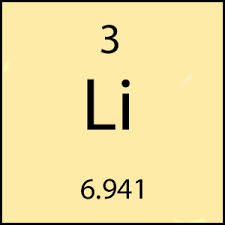
Atomic Number: 3
Atomic Weight: 6.941
Melting Point: 453.65 K (180.50°C or 356.90°F)
Boiling Point: 1615 K (1342°C or 2448°F)
Density: 0.534 grams per cubic centimeter
Phase at Room Temperature: Solid
Element Classification: Metal
Period Number: 2 Group Number: 1 Group Name: Alkali Metal
What’s in a name? From the Greek word for stone, lithos.
Say what? Lithium is pronounced as LITH-ee-em.
History and Uses:
Lithium was discovered in the mineral petalite (LiAl(Si2O5)2) by Johann August Arfvedson in 1817. It was first isolated by William Thomas Brande and Sir Humphrey Davy through the electrolysis of lithium oxide (Li2O). Today, larger amounts of the metal are obtained through the electrolysis of lithium chloride (LiCl). Lithium is not found free in nature and makes up only 0.0007% of the earth’s crust.
Many uses have been found for lithium and its compounds. Lithium has the highest specific heat of any solid element and is used in heat transfer applications. It is used to make special glasses and ceramics, including the Mount Palomar telescope’s 200 inch mirror. Lithium is the lightest known metal and can be alloyed with aluminium, copper, manganese, and cadmium to make strong, lightweight metals for aircraft. Lithium hydroxide (LiOH) is used to remove carbon dioxide from the atmosphere of spacecraft. Lithium stearate (LiC18H35O2) is used as a general purpose and high temperature lubricant. Lithium carbonate (Li2CO3) is used as a drug to treat manic depression disorder.
Lithium reacts with water, but not as violently as sodium.
Estimated Crustal Abundance: 2.0×101 milligrams per kilogram
Estimated Oceanic Abundance: 1.8×10⁻¹ milligrams per liter
Number of Stable Isotopes: 2
Ionization Energy: 5.392 eV
Oxidation States: +1
Electron Shell Configuration:
1s2 2s1
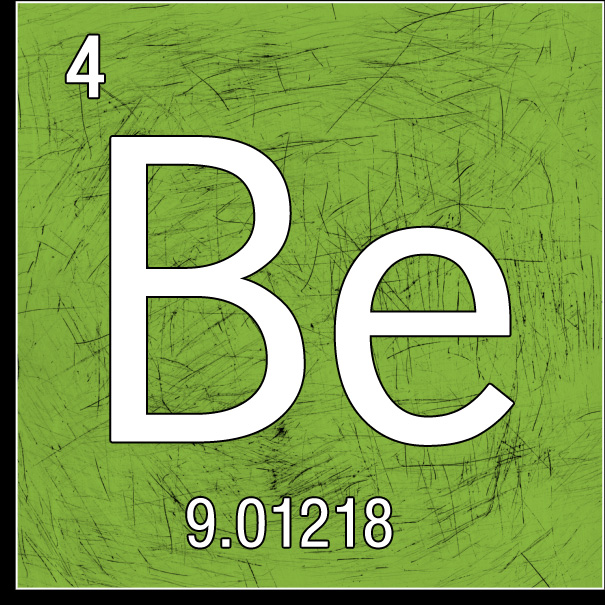
Atomic Number: 4
Atomic Weight: 9.012182
Melting Point: 1560 K (1287°C or 2349°F)
Boiling Point: 2744 K (2471°C or 4480°F)
Density: 1.85 grams per cubic centimeter
Phase at Room Temperature: Solid
Element Classification: Metal
Period Number: 2 Group Number: 2 Group Name: Alkaline Earth Metal
What’s in a name? From the Greek word beryl, a type of mineral.
Say what? Beryllium is pronounced as beh-RIL-ee-em.
History and Uses:
Although emeralds and beryl were known to ancient civilizations, they were first recognized as the same mineral (Be3Al2(SiO3)6) by Abbé Haüy in 1798. Later that year, Louis-Nicholas Vauquelin, a French chemist, discovered that an unknown element was present in emeralds and beryl. Attempts to isolate the new element finally succeeded in 1828 when two chemists, Friedrich Wölhler of Germany and A. Bussy of France, independently produced beryllium by reducing beryllium chloride (BeCl2) with potassium in a platinum crucible. Today, beryllium is primarily obtained from the minerals beryl (Be3Al2(SiO3)6) and bertrandite (4BeO·2SiO2·H2O) through a chemical process or through the electrolysis of a mixture of molten beryllium chloride (BeCl2) and sodium chloride (NaCl).
Beryllium is relatively transparent to X-rays and is used to make windows for X-ray tubes. When exposed to alpha particles, such as those emitted by radium or polonium, beryllium emits neutrons and is used as a neutron source. Beryllium is also used as a moderator in nuclear reactors.
Beryllium is alloyed with copper (2% beryllium, 98% copper) to form a wear resistant material, known as beryllium bronze, used in gyroscopes and other devices where wear resistance is important. Beryllium is alloyed with nickel (2% beryllium, 98% nickel) to make springs, spot-welding electrodes and non-sparking tools. Other beryllium alloys are used in the windshield, brake disks and other structural components of the space shuttle.
Beryllium oxide (BeO), a compound of beryllium, is used in the nuclear industry and in ceramics.
Beryllium was once known as glucinum, which means sweet, since beryllium and many of its compounds have a sugary taste. Unfortunately for the chemists that discovered this particular property, beryllium and many of its compounds are poisonous and should never be tasted or ingested.
Estimated Crustal Abundance: 2.8 milligrams per kilogram
Estimated Oceanic Abundance: 5.6×10⁻⁶ milligrams per liter
Number of Stable Isotopes: 1
Ionization Energy: 9.323
Oxidation States: +2
Electron Shell Configuration:
1s2 2s2
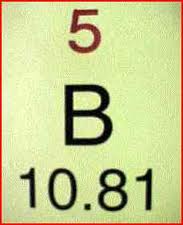
Atomic Number: 5
Atomic Weight: 10.811
Melting Point: 2348 K (2075°C or 3767°F)
Boiling Point: 4273 K (4000°C or 7232°F)
Density: 2.37 grams per cubic centimeter
Phase at Room Temperature: Solid
Element Classification: Semi-metal
Period Number: 2 Group Number: 13 Group Name: none
What’s in a name? From the Arabic word Buraq and the Persian word Burah, which are both words for the material “borax.”
Say what? Boron is pronounced as BO-ron.
History and Uses:
Boron was discovered by Joseph-Louis Gay-Lussac and Louis-Jaques Thénard, French chemists, and independently by Sir Humphry Davy, an English chemist, in 1808. They all isolated boron by combining boric acid (H3BO3) with potassium. Today, boron is obtained by heating borax (Na2B4O7·10H2O) with carbon, although other methods are used if high-purity boron is required.
Boron is used in pyrotechnics and flares to produce a green color. Boron has also been used in some rockets as an ignition source. Boron-10, one of the naturally occurring isotopes of boron, is a good absorber of neutrons and is used in the control rods of nuclear reactors, as a radiation shield and as a neutron detector. Boron filaments are used in the aerospace industry because of their high-strength and lightweight.
Boron forms several commercially important compounds. The most important boron compound is sodium borate pentahydrate (Na2B4O7·5H2O). Large amounts of this compound are used in the manufacture of fiberglass insulation and sodium perborate bleach. The second most important compound is boric acid (H3BO3), which is used to manufacture textile fiberglass and is used in cellulose insulation as a flame retardant. Sodium borate decahydrate (Na2B4O7·10H2O), better known as borax, is the third most important boron compound. Borax is used in laundry products and as a mild antiseptic. Borax is also a key ingredient in a substance known as Oobleck, a strange material 6th grade students experiment with while participating in Jefferson Lab’s BEAMS program. Other boron compounds are used to make borosilicate glasses, enamels for covering steel and as a potential medicine for treating arthritis.
Estimated Crustal Abundance: 1.0×101 milligrams per kilogram
Estimated Oceanic Abundance: 4.44 milligrams per liter
Number of Stable Isotopes: 2
Ionization Energy: 8.298
Oxidation States: +3
Electron Shell Configuration:
1s2 2s2 2p1
carbom
Atomic Number: 6
Atomic Weight: 12.0107
Melting Point: 3823 K (3550°C or 6422°F)
Boiling Point: 4098 K (3825°C or 6917°F)
Density: 2.2670 grams per cubic centimeter
Phase at Room Temperature: Solid
Element Classification: Non-metal
Period Number: 2 Group Number: 14 Group Name: none
What’s in a name? From the Latin word for charcoal, carbo.
Say what? Carbon is pronounced as KAR-ben.
History and Uses:
Carbon, the sixth most abundant element in the universe, has been known since ancient times. Carbon is most commonly obtained from coal deposits, although it usually must be processed into a form suitable for commercial use. Three naturally occurring allotropes of carbon are known to exist: amorphous, graphite and diamond.
Amorphous carbon is formed when a material containing carbon is burned without enough oxygen for it to burn completely. This black soot, also known as lampblack, gas black, channel black or carbon black, is used to make inks, paints and rubber products. It can also be pressed into shapes and is used to form the cores of most dry cell batteries, among other things.
Graphite, one of the softest materials known, is a form of carbon that is primarily used as a lubricant. Although it does occur naturally, most commercial graphite is produced by treating petroleum coke, a black tar residue remaining after the refinement of crude oil, in an oxygen-free oven. Naturally occurring graphite occurs in two forms, alpha and beta. These two forms have identical physical properties but different crystal structures. All artificially produced graphite is of the alpha type. In addition to its use as a lubricant, graphite, in a form known as coke, is used in large amounts in the production of steel. Coke is made by heating soft coal in an oven without allowing oxygen to mix with it. Although commonly called lead, the black material used in pencils is actually graphite.
Diamond, the third naturally occurring form of carbon, is one of the hardest substances known. Although naturally occurring diamond is typically used for jewelry, most commercial quality diamonds are artificially produced. These small diamonds are made by squeezing graphite under high temperatures and pressures for several days or weeks and are primarily used to make things like diamond tipped saw blades. Although they posses very different physical properties, graphite and diamond differ only in their crystal structure.
A fourth allotrope of carbon, known as white carbon, was produced in 1969. It is a transparent material that can split a single beam of light into two beams, a property known as birefringence. Very little is known about this form of carbon.
Large molecules consisting only of carbon, known as buckminsterfullerenes, or buckyballs, have recently been discovered and are currently the subject of much scientific interest. A single buckyball consists of 60 or 70 carbon atoms (C60 or C70) linked together in a structure that looks like a soccer ball. They can trap other atoms within their framework, appear to be capable of withstanding great pressures and have magnetic and superconductive properties.
Carbon-14, a radioactive isotope of carbon with a half-life of 5,730 years, is used to find the age of formerly living things through a process known as radiocarbon dating. The theory behind carbon dating is fairly simple. Scientists know that a small amount of naturally occurring carbon is carbon-14. Although carbon-14 decays into nitrogen-14 through beta decay, the amount of carbon-14 in the environment remains constant because new carbon-14 is always being created in the upper atmosphere by cosmic rays. Living things tend to ingest materials that contain carbon, so the percentage of carbon-14 within living things is the same as the percentage of carbon-14 in the environment. Once an organism dies, it no longer ingests much of anything. The carbon-14 within that organism is no longer replaced and the percentage of carbon-14 begins to decrease as it decays. By measuring the percentage of carbon-14 in the remains of an organism, and by assuming that the natural abundance of carbon-14 has remained constant over time, scientists can estimate when that organism died. For example, if the concentration of carbon-14 in the remains of an organism is half of the natural concentration of carbon-14, a scientist would estimate that the organism died about 5,730 years ago, the half-life of carbon-14.
There are nearly ten million known carbon compounds and an entire branch of chemistry, known as organic chemistry, is devoted to their study. Many carbon compounds are essential for life as we know it. Some of the most common carbon compounds are: carbon dioxide (CO2), carbon monoxide (CO), carbon disulfide (CS2), chloroform (CHCl3), carbon tetrachloride (CCl4), methane (CH4), ethylene (C2H4), acetylene (C2H2), benzene (C6H6), ethyl alcohol (C2H5OH) and acetic acid (CH3COOH).
Estimated Crustal Abundance: 2.00×10² milligrams per kilogram
Estimated Oceanic Abundance: 2.8×101 milligrams per liter
Number of Stable Isotopes: 2
Ionization Energy: 11.260
Oxidation States: +4, +2, -4
Electron Shell Configuration:
1s2 2s2 2p2
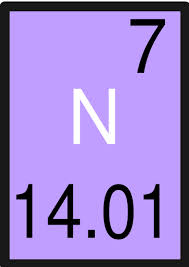
Atomic Number: 7
Atomic Weight: 14.0067
Melting Point: 63.15 K (-210.00°C or -346.00°F)
Boiling Point: 77.36 K (-195.79°C or -320.44°F)
Density: 0.0012506 grams per cubic centimeter
Phase at Room Temperature: Gas
Element Classification: Non-metal
Period Number: 2 Group Number: 15 Group Name: Pnictogen
What’s in a name? From the Greek words nitron and genes, which together mean “saltpetre forming.”
Say what? Nitrogen is pronounced as NYE-treh-gen.
History and Uses:
Nitrogen was discovered by the Scottish physician Daniel Rutherford in 1772. It is the fifth most abundant element in the universe and makes up about 78% of the earth’s atmosphere, which contains an estimated 4,000 trillion tons of the gas. Nitrogen is obtained from liquefied air through a process known as fractional distillation.
The largest use of nitrogen is for the production of ammonia (NH3). Large amounts of nitrogen are combined with hydrogen to produce ammonia in a method known as the Haber process. Large amounts of ammonia are then used to create fertilizers, explosives and, through a process known as the Ostwald process, nitric acid (HNO3).
Nitrogen gas is largely inert and is used as a protective shield in the semiconductor industry and during certain types of welding and soldering operations. Oil companies use high pressure nitrogen to help force crude oil to the surface. Liquid nitrogen is an inexpensive cryogenic liquid used for refrigeration, preservation of biological samples and for low temperature scientific experimentation. Jefferson Lab’s Frostbite Theater features videos of many basic liquid nitrogen experiments, such as this one:
Estimated Crustal Abundance: 1.9×101 milligrams per kilogram
Estimated Oceanic Abundance: 5×10⁻¹ milligrams per liter
Number of Stable Isotopes: 2
Ionization Energy: 14.534
Oxidation States: +5, +4, +3, +2, +1, -1, -2, -3
Electron Shell Configuration:
1s2 2s2 2p3
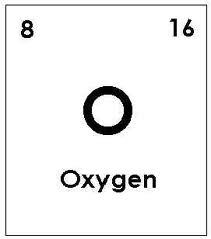
Atomic Number: 8
Atomic Weight: 15.9994
Melting Point: 54.36 K (-218.79°C or -361.82°F)
Boiling Point: 90.20 K (-182.95°C or -297.31°F)
Density: 0.001429 grams per cubic centimeter
Phase at Room Temperature: Gas
Element Classification: Non-metal
Period Number: 2 Group Number: 16 Group Name: Chalcogen
What’s in a name? From the greek words oxys and genes, which together mean “acid forming.”
Say what? Oxygen is pronounced as OK-si-jen.
History and Uses:
Oxygen had been produced by several chemists prior to its discovery in 1774, but they failed to recognize it as a distinct element. Joseph Priestley and Carl Wilhelm Scheele both independently discovered oxygen, but Priestly is usually given credit for the discovery. They were both able to produce oxygen by heating mercuric oxide (HgO). Priestley called the gas produced in his experiments ‘dephlogisticated air’ and Scheele called his ‘fire air’. The name oxygen was created by Antoine Lavoisier who incorrectly believed that oxygen was necessary to form all acids.
Oxygen is the third most abundant element in the universe and makes up nearly 21% of the earth’s atmosphere. Oxygen accounts for nearly half of the mass of the earth’s crust, two thirds of the mass of the human body and nine tenths of the mass of water. Large amounts of oxygen can be extracted from liquefied air through a process known as fractional distillation. Oxygen can also be produced through the electrolysis of water or by heating potassium chlorate (KClO3).
Oxygen is a highly reactive element and is capable of combining with most other elements. It is required by most living organisms and for most forms of combustion. Impurities in molten pig iron are burned away with streams of high pressure oxygen to produce steel. Oxygen can also be combined with acetylene (C2H2) to produce an extremely hot flame used for welding. Liquid oxygen, when combined with liquid hydrogen, makes an excellent rocket fuel. Ozone (O3) forms a thin, protective layer around the earth that shields the surface from the sun’s ultraviolet radiation. Oxygen is also a component of hundreds of thousands of organic compounds.
Estimated Crustal Abundance: 4.61×10⁵ milligrams per kilogram
Estimated Oceanic Abundance: 8.57×10⁵ milligrams per liter
Number of Stable Isotopes: 3
Ionization Energy: 13.618
Oxidation States: -2
Electron Shell Configuration:
1s2 2s2 2p4
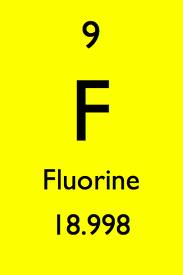
Atomic Number: 9
Atomic Weight: 18.9984032
Melting Point: 53.53 K (-219.62°C or -363.32°F)
Boiling Point: 85.03 K (-188.12°C or -306.62°F)
Density: 0.001696 grams per cubic centimeter
Phase at Room Temperature: Gas
Element Classification: Non-metal
Period Number: 2 Group Number: 17 Group Name: Halogen
What’s in a name? From the Latin and French words for flow, fluere.
Say what? Fluorine is pronounced as FLU-eh-reen or as FLU-eh-rin.
History and Uses:
Fluorine is the most reactive of all elements and no chemical substance is capable of freeing fluorine from any of its compounds. For this reason, fluorine does not occur free in nature and was extremely difficult for scientists to isolate. The first recorded use of a fluorine compound dates to around 1670 to a set of instructions for etching glass that called for Bohemian emerald (CaF2). Chemists attempted to identify the material that was capable of etching glass and George Gore was able to produce a small amount of fluorine through an electrolytic process in 1869. Unknown to Gore, fluorine gas explosively combines with hydrogen gas. That is exactly what happened in Gore’s experiment when the fluorine gas that formed on one electrode combined with the hydrogen gas that formed on the other electrode. Ferdinand Frederic Henri Moissan, a French chemist, was the first to successfully isolate fluorine in 1886. He did this through the electrolysis of potassium fluoride (KF) and hydrofluoric acid (HF). He also completely isolated the fluorine gas from the hydrogen gas and he built his electrolysis device completely from platinum. His work was so impressive that he was awarded the Nobel Prize for chemistry in 1906. Today, fluorine is still produced through the electrolysis of potassium fluoride and hydrofluoric acid as well as through the electrolysis of molten potassium acid fluoride (KHF2).
Fluorine is added to city water supplies in the proportion of about one part per million to help prevent tooth decay. Sodium fluoride (NaF), stannous(II) fluoride (SnF2) and sodium monofluorophosphate (Na2PO3F) are all fluorine compounds added to toothpaste, also to help prevent tooth decay. Hydrofluoric acid (HF) is used to etch glass, including most of the glass used in light bulbs. Uranium hexafluoride (UF6) is used to separate isotopes of uranium. Crystals of calcium fluoride (CaF2), also known as fluorite and fluorspar, are used to make lenses to focus infrared light. Fluorine joins with carbon to form a class of compounds known as fluorocarbons. Some of these compounds, such as dichlorodifluoromethane (CF2Cl2), were widely used in air conditioning and refrigeration systems and in aerosol spray cans, but have been phased out due to the damage they were causing to the earth’s ozone layer.
Estimated Crustal Abundance: 5.85×10² milligrams per kilogram
Estimated Oceanic Abundance: 1.3 milligrams per liter
Number of Stable Isotopes: 1
Ionization Energy: 17.423
Oxidation States: -1
Electron Shell Configuration:
1s2 2s2 2p5
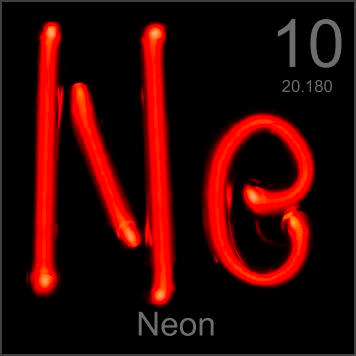
Atomic Number: 10
Atomic Weight: 20.1797
Melting Point: 24.56 K (-248.59°C or -415.46°F)
Boiling Point: 27.07 K (-246.08°C or -410.94°F)
Density: 0.0008999 grams per cubic centimeter
Phase at Room Temperature: Gas
Element Classification: Non-metal
Period Number: 2 Group Number: 18 Group Name: Noble Gas
What’s in a name? From the Greek word for new, neos.
Say what? Neon is pronounced as NEE-on.
History and Uses:
Neon was discovered by Sir William Ramsay, a Scottish chemist, and Morris M. Travers, an English chemist, shortly after their discovery of the element krypton in 1898. Like krypton, neon was discovered through the study of liquefied air. Although neon is the fourth most abundant element in the universe, only 0.0018% of the earth’s atmosphere is neon.
The largest use for neon gas is in advertising signs. Neon is also used to make high voltage indicators and is combined with helium to make helium-neon lasers. Liquid neon is used as a cryogenic refrigerant. Neon is highly inert and forms no known compounds, although there is some evidence that it could form a compound with flourine.
Estimated Crustal Abundance: 5×10⁻³ milligrams per kilogram
Estimated Oceanic Abundance: 1.2×10⁻⁴ milligrams per liter
Number of Stable Isotopes: 3
Ionization Energy: 21.565 eV
Oxidation States: 0
Electron Shell Configuration:
1s2 2s2 2p6
Atomic Number: 11
Atomic Weight: 22.98976928
Melting Point: 370.95 K (97.80°C or 208.04°F)
Boiling Point: 1156 K (883°C or 1621°F)
Density: 0.97 grams per cubic centimeter
Phase at Room Temperature: Solid
Element Classification: Metal
Period Number: 3 Group Number: 1 Group Name: Alkali Metal
What’s in a name? From the English word soda and from the Medieval Latin word sodanum, which means “headache remedy.” Sodium’s chemical symbol comes from the Latin word for sodium carbonate, natrium.
Say what? Sodium is pronounced as SO-dee-em.
History and Uses:
Although sodium is the sixth most abundant element on earth and comprises about 2.6% of the earth’s crust, it is a very reactive element and is never found free in nature. Pure sodium was first isolated by Sir Humphry Davy in 1807 through the electrolysis of caustic soda (NaOH). Since sodium can ignite on contact with water, it must be stored in a moisture free environment.
Sodium is used in the production of titanium, sodamide, sodium cyanide, sodium peroxide, and sodium hydride. Liquid sodium has been used as a coolant for nuclear reactors. Sodium vapor is used in streetlights and produces a brilliant yellow light.
Sodium also forms many useful compounds. Some of the most common are: table salt (NaCl), soda ash (Na2CO3), baking soda (NaHCO3), caustic soda (NaOH), Chile saltpeter (NaNO3) and borax (Na2B4O7·10H2O).
Estimated Crustal Abundance: 2.36×10⁴ milligrams per kilogram
Estimated Oceanic Abundance: 1.08×10⁴ milligrams per liter
Number of Stable Isotopes: 1 (View all isotope data)
Ionization Energy: 5.139 eV
Oxidation States: +1
Electron Shell Configuration:
1s2
2s2 2p6 3s1
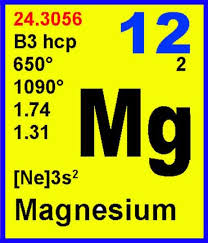
Atomic Number: 12
Atomic Weight: 24.3050
Melting Point: 923 K (650°C or 1202°F)
Boiling Point: 1363 K (1090°C or 1994°F)
Density: 1.74 grams per cubic centimeter
Phase at Room Temperature: Solid
Element Classification: Metal
Period Number: 3 Group Number: 2 Group Name: Alkaline Earth Metal
What’s in a name? For Magnesia, a district in the region of Thessaly, Greece.
Say what? Magnesium is pronounced as mag-NEE-zhi-em.
History and Uses:
Although it is the eighth most abundant element in the universe and the seventh most abundant element in the earth’s crust, magnesium is never found free in nature. Magnesium was first isolated by Sir Humphry Davy, an English chemist, through the electrolysis of a mixture of magnesium oxide (MgO) and mercuric oxide (HgO) in 1808. Today, magnesium can be extracted from the minerals dolomite (CaCO3·MgCO3) and carnallite (KCl·MgCl2·6H2O), but is most often obtained from seawater. Every cubic kilometer of seawater contains about 1.3 billion kilograms of magnesium (12 billion pounds per cubic mile).
Magnesium burns with a brilliant white light and is used in pyrotechnics, flares and photographic flashbulbs. Magnesium is the lightest metal that can be used to build things, although its use as a structural material is limited since it burns at relatively low temperatures. Magnesium is frequently alloyed with aluminum, which makes aluminum easier to roll, extrude and weld. Magnesium-aluminum alloys are used where strong, lightweight materials are required, such as in airplanes, missiles and rockets. Cameras, horseshoes, baseball catchers’ masks and snowshoes are other items that are made from magnesium alloys.
Magnesium oxide (MgO), also known as magnesia, is the second most abundant compound in the earth’s crust. Magnesium oxide is used in some antacids, in making crucibles and insulating materials, in refining some metals from their ores and in some types of cements. When combined with water (H2O), magnesia forms magnesium hydroxide (Mg(OH)2), better known as milk of magnesia, which is commonly used as an antacid and as a laxative.
Hydrated magnesium sulphate (MgSO4·7H2O), better known as Epsom salt, was discovered in 1618 by a farmer in Epsom, England, when his cows refused to drink the water from a certain mineral well. He tasted the water and found that it tasted very bitter. He also noticed that it helped heal scratches and rashes on his skin. Epsom salt is still used today to treat minor skin abrasions.
Other magnesium compounds include magnesium carbonate (MgCO3) and magnesium fluoride (MgF2). Magnesium carbonate is used to make some types of paints and inks and is added to table salt to prevent caking. A thin film of magnesium fluoride is applied to optical lenses to help reduce glare and reflections.
Estimated Crustal Abundance: 2.33×10⁴ milligrams per kilogram
Estimated Oceanic Abundance: 1.29×10³ milligrams per liter
Number of Stable Isotopes: 3
Ionization Energy: 7.646
Oxidation States: +2
Electron Shell Configuration:
1s2
2s2 2p6
3s2
Atomic Number: 13
Atomic Weight: 26.9815386
Melting Point: 933.437 K (660.323°C or 1220.581°F)
Boiling Point: 2792 K (2519°C or 4566°F)
Density: 2.70 grams per cubic centimeter
Phase at Room Temperature: Solid
Element Classification: Metal
Period Number: 3 Group Number: 13 Group Name: none
What’s in a name? From the Latin word for alum, alumen.
Say what? Aluminum is pronounced as ah-LOO-men-em.
History and Uses:
Although aluminum is the most abundant metal in the earth’s crust, it is never found free in nature. All of the earth’s aluminum has combined with other elements to form compounds. Two of the most common compounds are alum, such as potassium aluminum sulfate (KAl(SO4)2·12H2O), and aluminum oxide (Al2O3). About 8.2% of the earth’s crust is composed of aluminum.
Scientists suspected than an unknown metal existed in alum as early as 1787, but they did not have a way to extract it until 1825. Hans Christian Oersted, a Danish chemist, was the first to produce tiny amounts of aluminum. Two years later, Friedrich Wöhler, a German chemist, developed a different way to obtain aluminum. By 1845, he was able to produce samples large enough to determine some of aluminum’s basic properties. Wöhler’s method was improved in 1854 by Henri Étienne Sainte-Claire Deville, a French chemist. Deville’s process allowed for the commercial production of aluminum. As a result, the price of aluminum dropped from around $1200 per kilogram in 1852 to around $40 per kilogram in 1859. Unfortunately, aluminum remained too expensive to be widely used.
Two important developments in the 1880s greatly increased the availability of aluminum. The first was the invention of a new process for obtaining aluminum from aluminum oxide. Charles Martin Hall, an American chemist, and Paul L. T. Héroult, a French chemist, each invented this process independently in 1886. The second was the invention of a new process that could cheaply obtain aluminum oxide from bauxite. Bauxite is an ore that contains a large amount of aluminum hydroxide (Al2O3·3H2O), along with other compounds. Karl Joseph Bayer, an Austrian chemist, developed this process in 1888. The Hall-Héroult and Bayer processes are still used today to produce nearly all of the world’s aluminum.
With an easy way to extract aluminum from aluminum oxide and an easy way to extract large amounts of aluminum oxide from bauxite, the era of inexpensive aluminum had begun. In 1888, Hall formed the Pittsburgh Reduction Company, which is now known as the Aluminum Company of America, or Alcoa. When it opened, his company could produce about 25 kilograms of aluminum a day. By 1909, his company was producing about 41,000 kilograms of aluminum a day. As a result of this huge increase of supply, the price of aluminum fell rapidly to about $0.60 per kilogram.
Today, aluminum and aluminum alloys are used in a wide variety of products: cans, foils and kitchen utensils, as well as parts of airplanes, rockets and other items that require a strong, light material. Although it doesn’t conduct electricity as well as copper, it is used in electrical transmission lines because of its light weight. It can be deposited on the surface of glass to make mirrors, where a thin layer of aluminum oxide quickly forms that acts as a protective coating. Aluminum oxide is also used to make synthetic rubies and sapphires for lasers.
Estimated Crustal Abundance: 8.23×10⁴ milligrams per kilogram
Estimated Oceanic Abundance: 2×10⁻³ milligrams per liter
Number of Stable Isotopes: 1
Ionization Energy: 5.986
Oxidation States: +3
Electron Shell Configuration:
1s2
2s2 2p6
3s2 3p1
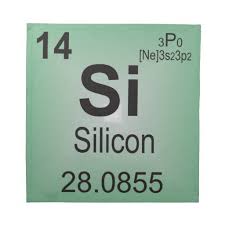
Atomic Number: 14
Atomic Weight: 28.0855
Melting Point: 1687 K (1414°C or 2577°F)
Boiling Point: 3538 K (3265°C or 5909°F)
Density: 2.3296 grams per cubic centimeter
Phase at Room Temperature: Solid
Element Classification: Semi-metal
Period Number: 3 Group Number: 14 Group Name: none
What’s in a name? From the Latin word for flint, silex.
Say what? Silicon is pronounced as SIL-ee-ken.
History and Uses:
Silicon was discovered by Jöns Jacob Berzelius, a Swedish chemist, in 1824 by heating chips of potassium in a silica container and then carefully washing away the residual by-products. Silicon is the seventh most abundant element in the universe and the second most abundant element in the earth’s crust. Today, silicon is produced by heating sand (SiO2) with carbon to temperatures approaching 2200°C.
Two allotropes of silicon exist at room temperature: amorphous and crystalline. Amorphous appears as a brown powder while crystalline silicon has a metallic luster and a grayish color. Single crystals of crystalline silicon can be grown with a process known as the Czochralski process. These crystals, when doped with elements such as boron, gallium, germanium, phosphorus or arsenic, are used in the manufacture of solid-state electronic devices, such as transistors, solar cells, rectifiers and microchips.
Silicon dioxide (SiO2), silicon’s most common compound, is the most abundant compound in the earth’s crust. It commonly takes the form of ordinary sand, but also exists as quartz, rock crystal, amethyst, agate, flint, jasper and opal. Silicon dioxide is extensively used in the manufacture of glass and bricks. Silica gel, a colloidal form of silicon dioxide, easily absorbs moisture and is used as a desiccant.
Silicon forms other useful compounds. Silicon carbide (SiC) is nearly as hard as diamond and is used as an abrasive. Sodium silicate (Na2SiO3), also known as water glass, is used in the production of soaps, adhesives and as an egg preservative. Silicon tetrachloride (SiCl4) is used to create smoke screens. Silicon is also an important ingredient in silicone, a class of material that is used for such things as lubricants, polishing agents, electrical insulators and medical implants.
Estimated Crustal Abundance: 2.82×10⁵ milligrams per kilogram
Estimated Oceanic Abundance: 2.2 milligrams per liter
Number of Stable Isotopes: 3
Ionization Energy: 8.152
Oxidation States: +4, +2, -4
Electron Shell Configuration:
1s2
2s2 2p6
3s2 3p2
Atomic Number: 15
Atomic Weight: 30.973762
Melting Point: 317.30 K (44.15°C or 111.47°F)
Boiling Point: 553.65 K (280.5°C or 536.9°F)
Density: 1.82 grams per cubic centimeter
Phase at Room Temperature: Solid
Element Classification: Non-metal
Period Number: 3 Group Number: 15 Group Name: Pnictogen
What’s in a name? From the Greek word for light bearing, phosphoros.
Say what? Phosphorus is pronounced as FOS-fer-es.
History and Uses:
In what is perhaps the most disgusting method of discovering an element, phosphorus was first isolated in 1669 by Hennig Brand, a German physician and alchemist, by boiling, filtering and otherwise processing as many as 60 buckets of urine. Thankfully, phosphorus is now primarily obtained from phosphate rock (Ca3(PO4)2).
Phosphorus has three main allotropes: white, red and black. White phosphorus is poisonous and can spontaneously ignite when it comes in contact with air. For this reason, white phosphorus must be stored under water and is usually used to produce phosphorus compounds. Red phosphorus is formed by heating white phosphorus to 250°C (482°F) or by exposing white phosphorus to sunlight. Red phosphorus is not poisonous and is not as dangerous as white phosphorus, although frictional heating is enough to change it back to white phosphorus. Red phosphorus is used in safety matches, fireworks, smoke bombs and pesticides. Black phosphorus is also formed by heating white phosphorus, but a mercury catalyst and a seed crystal of black phosphorus are required. Black phosphorus is the least reactive form of phosphorus and has no significant commercial uses.
Phosphoric acid (H3PO4) is used in soft drinks and to create many phosphate compounds, such as triple superphosphate fertilizer (Ca(H2PO4)2·H2O). Trisodium phosphate (Na3PO4) is used as a cleaning agent and as a water softener. Calcium phosphate (Ca3(PO4)2) is used to make china and in the production of baking powder. Some phosphorus compounds glow in the dark or emit light in response to absorbing radiation and are used in fluorescent light bulbs and television sets.
Estimated Crustal Abundance: 1.05×10³ milligrams per kilogram
Estimated Oceanic Abundance: 6×10⁻² milligrams per liter
Number of Stable Isotopes: 1
Ionization Energy: 10.487
Oxidation States: +5, +3, -3
Electron Shell Configuration:
1s2
2s2 2p6
3s2 3p3

Atomic Number: 17
Atomic Weight: 35.453
Melting Point: 171.65 K (-101.5°C or -150.7°F)
Boiling Point: 239.11 K (-34.04°C or -29.27°F)
Density: 0.003214 grams per cubic centimeter
Phase at Room Temperature: Gas
Element Classification: Non-metal
Period Number: 3 Group Number: 17 Group Name: Halogen
What’s in a name? From the Greek word for greenish yellow, chloros.
Say what? Chlorine is pronounced as KLOR-een or as KLOR-in.
History and Uses:
Since it combines directly with nearly every element, chlorine is never found free in nature. Chlorine was first produced by Carl Wilhelm Scheele, a Swedish chemist, when he combined the mineral pyrolusite (MnO2) with hydrochloric acid (HCl) in 1774. Although Scheele thought the gas produced in his experiment contained oxygen, Sir Humphry Davy proved in 1810 that it was actually a distinct element. Today, most chlorine is produced through the electrolysis of aqueous sodium chloride (NaCl).
Chlorine is commonly used as an antiseptic and is used to make drinking water safe and to treat swimming pools. Large amounts of chlorine are used in many industrial processes, such as in the production of paper products, plastics, dyes, textiles, medicines, antiseptics, insecticides, solvents and paints.
Two of the most familiar chlorine compounds are sodium chloride (NaCl) and hydrogen chloride (HCl). Sodium chloride, commonly known as table salt, is used to season food and in some industrial processes. Hydrogen chloride, when mixed with water (H2O), forms hydrochloric acid, a strong and commercially important acid. Other chlorine compounds include: chloroform (CHCl3), carbon tetrachloride (CCl4), potassium chloride (KCl), lithium chloride (LiCl), magnesium chloride (MgCl2) and chlorine dioxide (ClO2).
Chlorine is a very dangerous material. Liquid chlorine burns the skin and gaseous chlorine irritates the mucus membranes. Concentrations of the gas as low as 3.5 parts per million can be detected by smell while concentrations of 1000 parts per million can be fatal after a few deep breaths.
Estimated Crustal Abundance: 1.45×10² milligrams per kilogram
Estimated Oceanic Abundance: 1.94×10⁴ milligrams per liter
Number of Stable Isotopes: 2
Ionization Energy: 12.968
Oxidation States: +7, +5, +1, -1
Electron Shell Configuration:
1s2
2s2 2p6
3s2 3p5
Atomic Number: 18
Atomic Weight: 39.948
Melting Point: 83.80 K (-189.35°C or -308.83°F)
Boiling Point: 87.30 K (-185.85°C or -302.53°F)
Density: 0.0017837 grams per cubic centimeter
Phase at Room Temperature: Gas
Element Classification: Non-metal
Period Number: 3 Group Number: 18 Group Name: Noble Gas
What’s in a name? From the Greek word for inactive, argos.
Say what? Argon is pronounced as AR-gon.
History and Uses:
Argon was discovered by Sir William Ramsay, a Scottish chemist, and Lord Rayleigh, an English chemist, in 1894. Argon makes up 0.93% of the earth’s atmosphere, making it the third most abundant gas. Argon is obtained from the air as a byproduct of the production of oxygen and nitrogen.
Argon is frequently used when an inert atmosphere is needed. It is used to fill incandescent and fluorescent light bulbs to prevent oxygen from corroding the hot filament. Argon is also used to form inert atmospheres for arc welding, growing semiconductor crystals and processes that require shielding from other atmospheric gases.
Once thought to be completely inert, argon is known to form at least one compound. The synthesis of argon fluorohydride (HArF) was reported by Leonid Khriachtchev, Mika Pettersson, Nino Runeberg, Jan Lundell and Markku Räsänen in August of 2000. Stable only at very low temperatures, argon fluorohydride begins to decompose once it warms above -246°C (-411°F). Because of this limitation, argon fluorohydride has no uses outside of basic scientific research.
Estimated Crustal Abundance: 3.5 milligrams per kilogram
Estimated Oceanic Abundance: 4.5×10⁻¹ milligrams per liter
Number of Stable Isotopes: 3
Ionization Energy: 15.760
Oxidation States: 0
Electron Shell Configuration:
1s2
2s2 2p6
3s2 3p6
Atomic Number: 19
Atomic Weight: 39.0983
Melting Point: 336.53 K (63.38°C or 146.08°F)
Boiling Point: 1032 K (759°C or 1398°F)
Density: 0.89 grams per cubic centimeter
Phase at Room Temperature: Solid
Element Classification: Metal
Period Number: 4 Group Number: 1 Group Name: Alkali Metal
What’s in a name? From the English word potash. Potassium’s chemical symbol comes from the Latin word for alkali, kalium.
Say what? Potassium is pronounced as poh-TASS-ee-em.
History and Uses:
Although potassium is the eighth most abundant element on earth and comprises about 2.1% of the earth’s crust, it is a very reactive element and is never found free in nature. Metallic potassium was first isolated by Sir Humphry Davy in 1807 through the electrolysis of molten caustic potash (KOH). A few months after discovering potassium, Davy used the same method to isolate sodium. Potassium can be obtained from the minerals sylvite (KCl), carnallite (KCl·MgCl2·6H2O), langbeinite (K2Mg2(SO4)3) and polyhalite (K2Ca2Mg(SO4)4·2H2O). These minerals are often found in ancient lake and sea beds. Caustic potash, another important source of potassium, is primarily mined in Germany, New Mexico, California and Utah.
Pure potassium is a soft, waxy metal that can be easily cut with a knife. It reacts with oxygen to form potassium superoxide (KO2) and with water to form potassium hydroxide (KOH), hydrogen gas and heat. Enough heat is produced to ignite the hydrogen gas. To prevent it from reacting with the oxygen and water in the air, samples of metallic potassium are usually stored submerged in mineral oil.
Potassium forms an alloy with sodium (NaK) that is used as a heat transfer medium in some types of nuclear reactors.
Potassium forms many important compounds. Potassium chloride (KCl) is the most common potassium compound. It is used in fertilizers, as a salt substitute and to produce other chemicals. Potassium hydroxide (KOH) is used to make soaps, detergents and drain cleaners. Potassium carbonate (KHCO3), also known as pearl ash, is used to make some types of glass and soaps and is obtained commercially as a byproduct of the production of ammonia. Potassium superoxide (KO2) can create oxygen from water vapor (H2O) and carbon dioxide (CO2) through the following reaction: 2KO2 + H2O + 2CO2 => 2KHCO3 + O2. It is used in respiratory equipment and is produced by burning potassium metal in dry air. Potassium nitrate (KNO3), also known as saltpeter or nitre, is used in fertilizers, match heads and pyrotechnics.
Estimated Crustal Abundance: 2.09×10⁴ milligrams per kilogram
Estimated Oceanic Abundance: 3.99×10² milligrams per liter
Number of Stable Isotopes: 2
Ionization Energy: 4.341
Oxidation States: +1
Electron Shell Configuration:
1s2
2s2 2p6
3s2 3p6
4s1
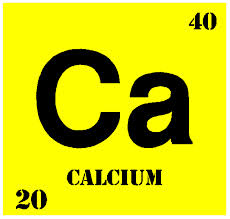
Atomic Number: 20
Atomic Weight: 40.078
Melting Point: 1115 K (842°C or 1548°F)
Boiling Point: 1757 K (1484°C or 2703°F)
Density: 1.54 grams per cubic centimeter
Phase at Room Temperature: Solid
Element Classification: Metal
Period Number: 4 Group Number: 2 Group Name: Alkaline Earth Metal
What’s in a name? From the Latin word for lime, calx.
Say what? Calcium is pronounced as KAL-see-em.
History and Uses:
Although calcium is the fifth most abundant element in the earth’s crust, it is never found free in nature since it easily forms compounds by reacting with oxygen and water. Metallic calcium was first isolated by Sir Humphry Davy in 1808 through the electrolysis of a mixture of lime (CaO) and mercuric oxide (HgO). Today, metallic calcium is obtained by displacing calcium atoms in lime with atoms of aluminum in hot, low-pressure containers. About 4.2% of the earth’s crust is composed of calcium.
Due to its high reactivity with common materials, there is very little demand for metallic calcium. It is used in some chemical processes to refine thorium, uranium and zirconium. Calcium is also used to remove oxygen, sulfur and carbon from certain alloys. Calcium can be alloyed with aluminum, beryllium, copper, lead and magnesium. Calcium is also used in vacuum tubes as a getter, a material that combines with and removes trace gases from vacuum tubes.
Calcium carbonate (CaCO3) is one of the common compounds of calcium. It is heated to form quicklime (CaO) which is then added to water (H2O). This forms another material known as slaked lime (Ca(OH)2) which is an inexpensive base material used throughout the chemical industry. Chalk, marble and limestone are all forms of calcium carbonate. Calcium carbonate is used to make white paint, cleaning powder, toothpaste and stomach antacids, among other things. Other common compounds of calcium include: calcium sulfate (CaSO4), also known as gypsum, which is used to make dry wall and plaster of Paris, calcium nitrate (Ca(NO3)2), a naturally occurring fertilizer and calcium phosphate (Ca3(PO4)2), the main material found in bones and teeth.
Estimated Crustal Abundance: 4.15×10⁴ milligrams per kilogram
Estimated Oceanic Abundance: 4.12×10² milligrams per liter
Number of Stable Isotopes: 3
Ionization Energy: 6.113
Oxidation States: +2
Electron Shell Configuration:
1s2
2s2 2p6
3s2 3p6
4s2
 sciencejoint