The Electromagnetic and Visible Spectra

As discussed in Unit 10 of The Physics Classroom Tutorial, electromagnetic waves are waves that are capable of traveling through a vacuum. Unlike mechanical waves that require a medium in order to transport their energy, electromagnetic waves are capable of transporting energy through the vacuum of outer space. Electromagnetic waves are produced by a vibrating electric charge and as such, they consist of both an electric and a magnetic component. The precise nature of such electromagnetic waves is not discussed in The Physics Classroom Tutorial. Nonetheless, there are a variety of statements that can be made about such waves. Continue reading

Nuclear Chemistry

490px-Nulcear_radiation
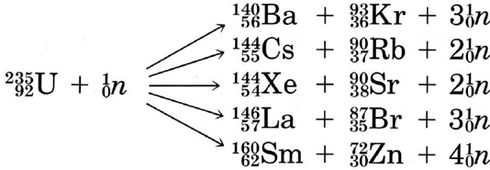
In our discussion on Radiation we described the experimental basis for the idea that each atom has a small, very massive nucleus which contains protons and neutrons. Surrounding the nucleus are one or more electrons which occupy most of the volume of the atom but make only a small contribution to its mass. Electrons (especially valence electrons) are the only subatomic particles which are involved in ordinary chemical changes, and we have spent considerable time describing the rearrangements they undergo when atoms and molecules combine. However, another category of reactions is possible in which the structures of atomic nuclei change. In such nuclear reactions electronic structure is incidental—we are primarily interested in how the protons and neutrons are arranged before and after the reaction. Nuclear reactions are involved in transmutation of one element into another and in natural radioactivity. In these sections we consider nuclear reactions in more detail, exploring their applications to nuclear energy, to the study of reaction mechanisms, to qualitative and quantitative analysis, and to estimation of the ages of objects as different as the Dead Sea scrolls and rocks from the moon.

Nuclear reactions involve rearrangements of the protons and neutrons within atomic nuclei. During naturally occurring nuclear reactions α particles, β particles, and γ rays are emitted, often in a radioactive series of successive reactions. Nuclear reactions may also be induced by bombarding nuclei with positive ions or neutrons. Artificial isotopes produced in this way may decay by positron emission or electron capture as well as by α , β or γ emission. Stability of nuclei depends on the neutron/proton ratio (usually between 1 and 1.6) and magic numbers of protons and neutrons. Continue reading

Molecules in Living Systems

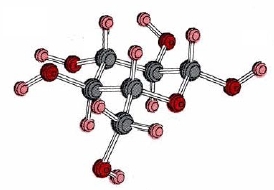
Β-glucose

Most of us have little difficulty distinguishing living organisms from inanimate matter. The former are capable of reproducing nearly exact copies of themselves; they can appropriate both matter and energy from their surroundings, moving, growing, and repairing damage caused by external factors; and groups of them evolve and adapt in response to long-term environmental changes. On a macroscopic scale the differences are sufficiently striking that early philosophers and scientists postulated the existence of a vital force without which living organisms would be inanimate. It was thought that organic compounds could only be manufactured in living organisms, and chemistry was divided into the subfields of inorganic and organic on this basis. Continue reading

Electrolysis

8da9fbd8e9a9ed9fa2571b066ae3e484

An_Electrolytic_Cell

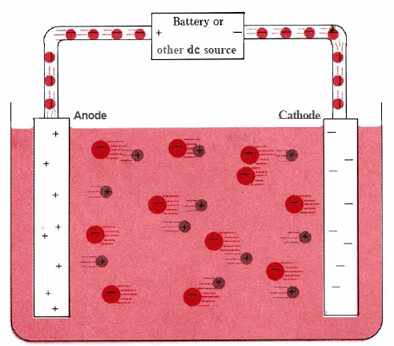
electrolysis is the passage of a direct electric current through an ion-containing solution. Electrolysis produces chemical changes at the electrodes.
In chemistry, the production of chemical changes by passing an electric current through a solution or molten salt (the electrolyte), resulting in the migration of ions to the electrodes: positive ions (cations) to the negative electrode (cathode) and negative ions (anions) to the positive electrode (anode). Continue reading

Nuclear Chemistry

The discovery of x-rays by William Conrad Roentgen in November of 1895 excited the imagination of a generation of scientists who rushed to study this phenomenon. Within a few months, Henri Becquerel found that both uranium metal and salts of this element gave off a different form of radiation, which could also pass through solids. By 1898, Marie Curie found that compounds of thorium were also “radioactive.” After pain-staking effort she eventually isolated two more radioactive elements–polonium and radium–from ores that contained uranium.
Continue reading